By Bryan Smeltzer
Visionary Business Leadership: Decoding the Future with Insight
Visionary business leadership is less about reacting to trends and more about decoding what comes next. Insight turns information into a directional force that shapes markets, cultures, and legacies. The goal is to teach you how to harness foresight, build an adaptable process, and mobilize teams so your organization leads the future instead of chasing it.
Table of Contents
- Why insight matters more than information
- One line that clarifies everything
- Three core principles of future-focused insight
- What makes insight agile?
- Practical frameworks to build foresight
- Futurecasting: a strategic weapon
- Execution: empathy, observation, and diversity
- Execution framework: Predict, Refine, Execute
- Common pitfalls
- Questions to ask yourself now
- FAQ
- Final note
Why insight matters more than information
Most managers make decisions driven by the past and present. Visionary business leadership flips that script: the future informs current choices. Insight is not simply recognizing patterns; it is dissecting the DNA of change and extracting strategic foresight that positions a company to shape the market.
Insight without action is just noise. Equally, action without prediction is aimless. The combination of foresight plus decisive execution is what builds generational companies rather than one-hit wonders.
One line that clarifies everything
“If one is master of one thing and understands one thing well, one has at the same time insight into an understanding of many things.”
That line captures a central truth of visionary business leadership: deep mastery in a focused area creates the perspective to connect disparate ideas and design futures that others cannot see.
Three core principles of future-focused insight
- Strategic foresight over tactical response
Leaders who dominate think in trajectories, not just trends. Trends are visible and reactive. Foresight requires identifying an ongoing direction that hasn’t fully formed yet and making choices today to deliver on that future.
- Anticipate customer needs before they articulate them
Customers can describe current frustrations but rarely invent the breakthrough solution you need to create. Study behavior, not just opinions. Henry Ford’s faster-horse observation and Steve Jobs‘ product intuition are classic examples of anticipating need before the market can explain it.
- Purpose-driven insight
Insight must be anchored to a clear purpose. Purpose acts as a magnet that aligns teams and filters which ideas are worth pursuing. This is what creates consistent, passionate cultures that innovate rather than iterate.
What makes insight agile?
Insight turns into impact when it is both sharp and responsive. Agile insight requires flexibility—what I call switchback leadership—where you keep the destination constant but are prepared for strategic detours.
Three attributes of agile insight
- Blend of intuition and expertise — Great vision comes from tuned instincts grounded in deep study of your domain.
- Proactive analysis — Track technology, market shifts, and competitor movements before they become problems.
- Rapid validation — Use calculated insight to test concepts and identify barriers early so you can adapt quickly.
Practical frameworks to build foresight
Insight is a discipline, not a one-time idea. Below are tactical frameworks you can institutionalize to turn foresight into repeatable advantage.
SWAT plus (Strengths, Weaknesses, Opportunities, Threats + scenario planning)
- Create multiple future scenarios based on different outcomes.
- Test-market scenarios and stress-test the next-generation pipeline.
- Cross-pollinate ideas from other industries to spark breakthrough innovation.
Global perspective matters
Visionary business leadership scales beyond local norms. Adopt a shotgun lens that examines international trends, trade dynamics, demographic shifts, and cultural values. What resonates in one market may fail in another, so build strategies that can be localized.
Collaborative insight
The smartest room is the room itself. Collective intelligence amplifies insight when leaders are humble, encourage transparent communication, and empower contributions from across the organization. Create safe spaces where ideas can be tested without fear.
Futurecasting: a strategic weapon
Futurecasting is deliberate futurism. Set your destination in the future, then work backward to bridge present capabilities to that future state. This lets you align product roadmaps, partnerships, and talent development to a coherent long-term aim.
How to use futurecasting today
- Technology tracking — Monitor emerging tech and evaluate their potential impact on your business model.
- Expert collaboration — Bring in futurists and cross-disciplinary experts who specialize in trend synthesis and long-term forecasting.
- Scenario rehearsals — Run tabletop exercises that force teams to react to plausible futures and surface organizational gaps.
Execution: empathy, observation, and diversity
Insight must be paired with granular execution practices that keep the customer front and center.
- Customer empathy — Simplify experiences and design with the end-user in mind. Products should be intuitive, not require manuals.
- Diverse perspectives — Invite varied backgrounds into ideation sessions to challenge assumptions and surface unconventional solutions.
- Behavioral observation — Watch how people actually use products. Observed behavior reveals needs that surveys rarely capture.
Execution framework: Predict, Refine, Execute
- Predict — Use insight to decode what is coming next.
- Refine — Continuously adjust based on new data and team intelligence.
- Execute — Move with conviction and agility; iterate rapidly.
Common pitfalls
- Predicting without executing: brilliant forecasts that never hit the market.
- Executing without predicting: lots of activity with no durable advantage.
- Relying on polls instead of behavioral data: asking the wrong questions produces the wrong answers.
Questions to ask yourself now
- Where am I operating from observation instead of insight?
- What parts of my organization are reactive rather than predictive?
- How effectively am I leveraging collective intelligence?
FAQ
What is visionary business leadership in a single sentence?
Visionary business leadership is the practice of using disciplined insight and foresight to design future-directed strategies, then mobilizing teams to execute them with agility.
How do I start building foresight in my organization?
Begin by scheduling regular, uninterrupted insight sessions; combine SWAT plus scenario planning with technology tracking and expert collaboration; and institutionalize behavioral observation as a product development input.
Can small teams adopt these practices or are they only for large companies?
Small teams often have an advantage: they can iterate faster. Focus on the three pillars—predict, refine, execute—and institutionalize humble collaboration and customer empathy to scale foresight practices regardless of size.
How do you balance risk-taking with sound strategy?
Treat risk as a calculated variable: use scenario planning to map potential outcomes, validate concepts quickly, and maintain an innovation pipeline so one bet does not define your future.
Final note
Visionary business leadership is a repeatable discipline: focus intensely on a core mastery, translate that into broad insight, and use foresight to inform daily choices. When insight, humility, and execution combine, organizations shape markets instead of being shaped by them.
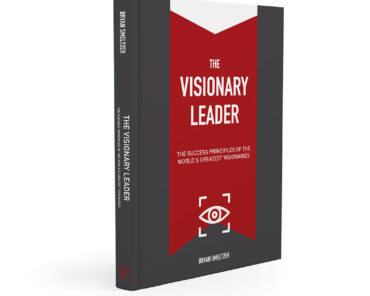
The Visionary Leader eBook! |
|
Get your eBook for Review on Amazon! |
| Click me |
This article was created from the video THE INSIGHT | Decoding the Future | How Insight Separates Visionaries from Managers with the help of AI.